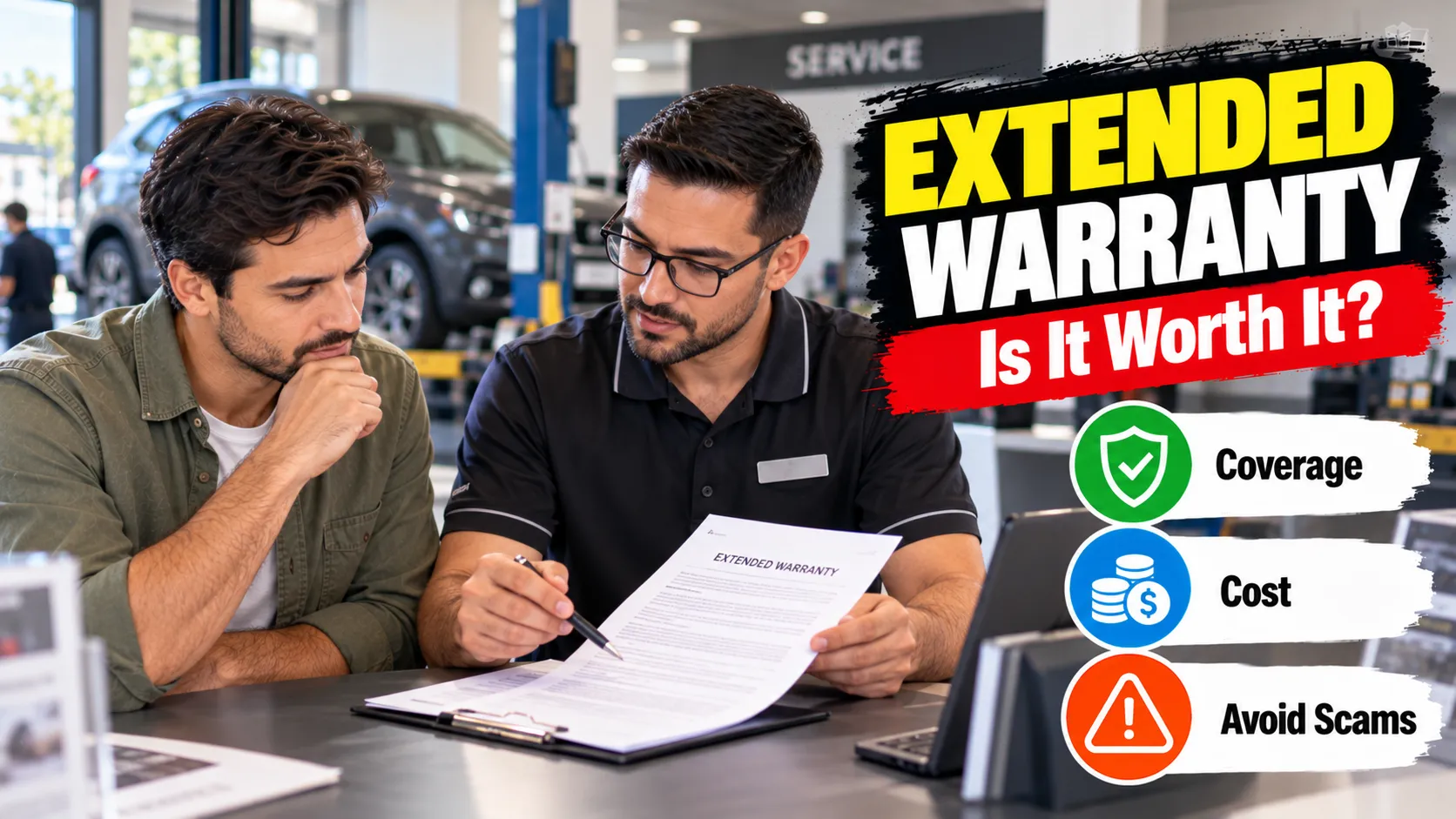
When you buy a car, especially a used one, you will almost certainly be offered an extended warranty. Some people find these plans useful, while others pay for coverage they never use. Whether one is worth it depends on the car, how long you plan to keep it, how much the plan costs and what it actually covers, which is often less than the sales pitch suggests.
This guide explains how extended warranties work, the difference between manufacturer and third-party plans, what is usually covered and excluded, how to decide whether one makes sense and how to avoid the warranty scams that target car owners. It is general information, not legal or financial advice. Always read the full contract before you buy.
What an extended warranty really is
Most “extended warranties” are technically vehicle service contracts. A true warranty comes with a new car and is included in the price. A service contract is an optional product you buy separately that agrees to pay for certain repairs for a set period or mileage. They are sold by car manufacturers, dealers and independent companies, and the terms vary widely.
Plans fall into a few broad types. Powertrain plans cover the engine, transmission and drivetrain. Stated-component plans cover only the parts listed in the contract. Exclusionary plans, often marketed as bumper-to-bumper, cover everything except a list of exclusions and are usually the most comprehensive and most expensive.
Manufacturer vs third-party plans
| Feature | Manufacturer-backed plan | Third-party plan |
|---|---|---|
| Who backs it | The car maker | An independent company, sometimes sold through dealers |
| Where you get repairs | Usually any franchised dealer for that brand | Depends on the contract; some allow any licensed shop |
| Parts used | Usually original manufacturer parts | May allow used or aftermarket parts |
| Claims process | Handled through the dealer | Often requires approval before repairs start |
| Main risk | Price markups at the dealer | Claim denials, exclusions or a company going out of business |
Prices for the same manufacturer plan can vary between dealers, and many dealers will negotiate. You also do not usually have to buy the plan when you buy the car; many manufacturer plans can be purchased later, as long as the factory warranty has not expired.
What is usually not covered
Service contracts typically exclude routine maintenance such as oil changes, brakes, tires, wiper blades and other wear items. They often exclude damage from accidents, misuse, lack of maintenance, modifications and pre-existing problems. Many have a deductible per repair visit or per repair item, waiting periods before coverage starts and requirements to keep maintenance records. If you cannot show the car was maintained on schedule, a claim may be denied.
Example: A driver buys a third-party plan advertised as complete coverage. When the air conditioning compressor fails, the company denies the claim because the contract only covers listed components, and the compressor is not on the list. Reading the coverage list before buying, rather than relying on the brochure, would have shown the gap.
When an extended warranty may make sense
A plan can be worth considering if your car model has a reputation for costly repairs, you plan to keep the car well past the factory warranty, the car has expensive electronics or components that are hard to fix, or an unexpected repair bill of a few thousand dollars would seriously strain your budget. Some people simply value predictable costs and peace of mind.
When it may not be worth it
It is often not worth it if the car is still well within its factory warranty and you will sell it before that ends, the model has a strong reliability record, you could cover a large repair from savings, or the price is high compared with the repairs it is likely to pay for. Some people choose to put the money they would have spent on a plan into a dedicated savings account for car repairs instead.
A simple way to judge the price
One useful test is to compare the plan’s total cost, including deductibles, with the repairs it would realistically pay for during the years you will own the car. Look up the most common problems for your model and their typical repair costs, then ask yourself how likely they are to happen while the plan is active. If the plan costs close to what a major repair would cost and your model is generally reliable, you are mostly paying for peace of mind. If your model has a known history of an expensive failure that the contract clearly covers, the numbers may work in your favor.
Also check how claims are paid. Some plans pay the repair shop directly, while others require you to pay first and wait for reimbursement, which matters if you do not have the cash on hand.
Step-by-step: evaluating a plan
- Check your existing warranty. Note when the factory bumper-to-bumper and powertrain coverage end.
- Research your model’s reliability. Look at common problems and typical repair costs.
- Get the full contract. Read the coverage list, exclusions, deductible and claims process, not just the brochure.
- Check who backs the plan. Confirm whether it is manufacturer-backed or third-party, and look up complaints.
- Compare prices. Get quotes from more than one dealer or provider, and negotiate.
- Check the cancellation policy. Many plans offer a prorated refund if you sell the car or change your mind.
Do not let it inflate your car loan
Finance offices often add service contracts to the loan, which means you pay interest on them for years. Ask for the price on its own, decide separately from the car purchase and pay for it in cash if you can. A plan is optional, and a dealer cannot require you to buy one to get financing.
How to spot warranty scams
Car warranty robocalls and mailers are a common scam. The Federal Trade Commission warns about calls and letters that claim your warranty is about to expire and urge you to act now. Warning signs include vague references to “your vehicle,” pressure to decide immediately, requests for your Social Security number or bank details, and demands for payment by gift card or wire transfer.
If you receive one of these, do not press any buttons or call back. Check your actual warranty status with your dealer or manufacturer, and report unwanted calls to the FTC. Never give personal or financial information to someone who contacted you unexpectedly.
Common questions
Is an extended car warranty the same as a warranty
Usually not. Most are vehicle service contracts, which are optional products you buy separately. A factory warranty is included with a new car.
Can I buy an extended warranty after I buy the car
Often, yes. Many manufacturer plans can be purchased later, as long as the factory warranty has not expired.
Can I cancel an extended warranty
Many contracts allow cancellation with a prorated refund, sometimes minus a fee. Check the cancellation terms in the contract.
Are car warranty calls a scam
Unsolicited calls saying your warranty is expiring are a common scam, according to the FTC. Check your coverage directly with your dealer or manufacturer instead.
Before you buy a plan
Know when your factory warranty ends, research your car’s reliability, read the full contract and compare prices from more than one source. Decide separately from the car purchase, avoid rolling the cost into your loan and ignore anyone who pressures you to act immediately.
Editorial note: This article is general information and not legal or financial advice. It is not affiliated with any manufacturer, dealer or warranty company. Service contract terms vary widely. Read the full contract and check your state’s consumer protection resources before buying.